
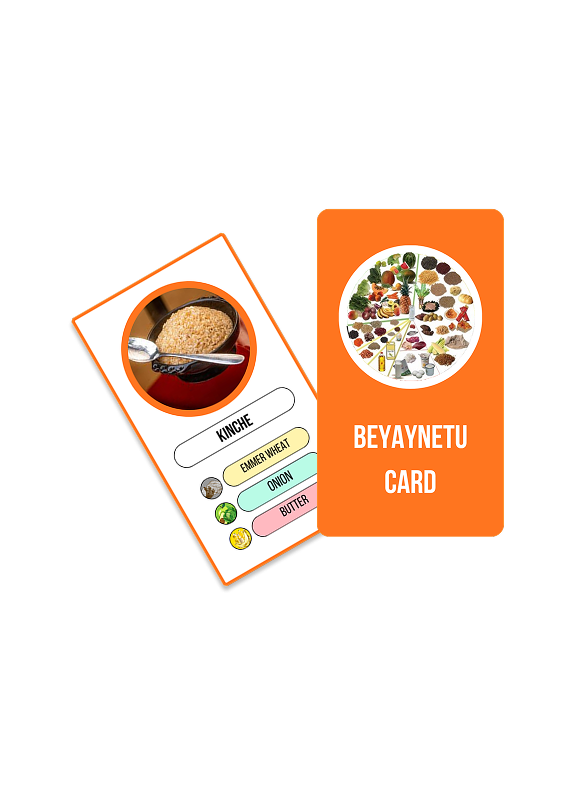
Game 01 · Levels 1–3
Beyaynetu
To learn about food groups & diversified diet.
Taking a healthy playful bite
gursha — the act of placing a folded bite of food into another person's mouth with your own hand. In Ethiopia it is not a way of feeding someone. It is a way of saying you belong at this table and an expression of love and care.
Ethiopia’s 2022 dietary guidelines are a policy document, not something that teenagers actually read. Therefore 47 teenagers helped turn them into games. Students said they were eating differently at home after 13 weeks of play.
The approach
Lectures frustrate teenagers quickly. Thus we let them design the games with nutritionists and game designers sitting next to them, and then measured what changed over thirteen weeks.
Two four-day workshops with 47 adolescents informed the design and produced the first prototypes.
The workshops →Playtests with the co-creators, then with a separate student group, to assess whether the rules were learnable.
Thirteen weeks of weekly gameplay in six schools, with six control schools for comparison.
The results →Games and rulebooks were distributed to all twelve schools for continued use.
The handover →The portfolio
Three game families, three ways of learning. Beyaynetu sorts and balances food across three levels. Gursha is about portions. Digis maps the wider food environment.
To learn about food groups & diversified diet.
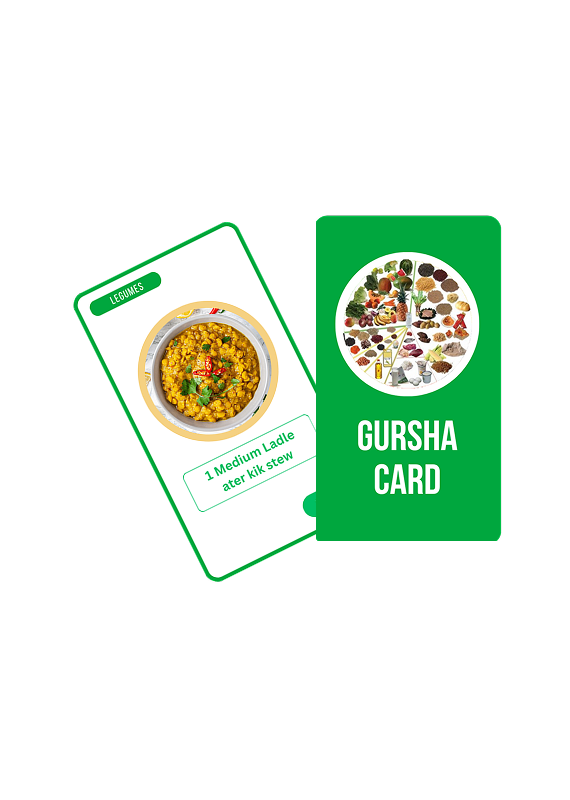
To learn about amount.
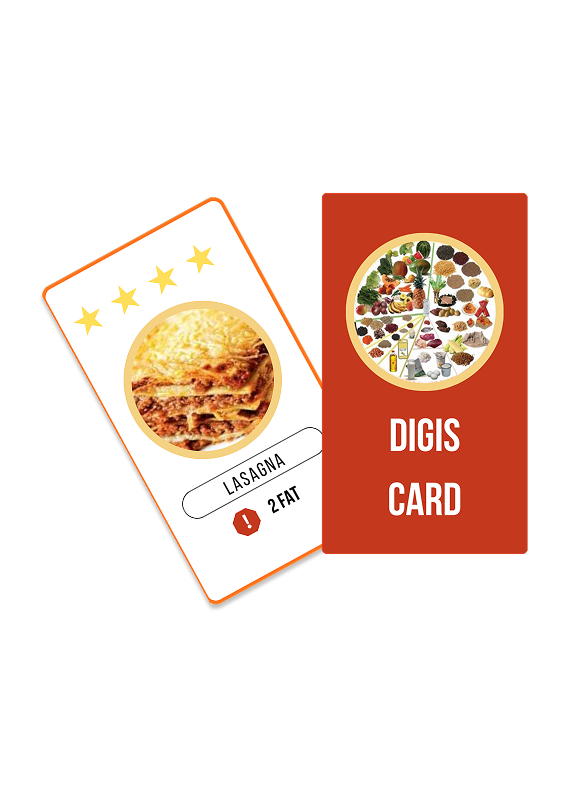
To learn about where to get each food.
The intervention
Weekly lunchtime play in six schools, with six control schools alongside. Printed games, trained local facilitators, existing lunch breaks — deliberately low-cost and built to copy. We tracked attendance and behaviour the whole way through.

The games taught us about food, and I actually changed my own eating habits because of it.Student, School 4 · week 12
The games helped me understand how to organize my diet daily to live healthy.Student, School 6
I want to focus on my meals more going forward.Student, School 1
Project arc
Scroll sideways to follow the timeline →
Partners






With the support of




For donors & institutional funders
A finished, documented intervention. Ready for assessment: the co-design method, the games, thirteen weeks of data against control schools, and a handover model built to outlast the study.
62% average attendance retained over 13 weeks, observed peer-to-peer teaching, and students' self-reported changes to meals at home — documented alongside six control schools.
Printed card games, locally trained Game Masters and lunch-break sessions. No screens, no infrastructure and no per-student technology cost.
The FBDG framework is national policy. The games, rulebooks and training model are designed for replication in other regions with partner support.